The Trdelnik Truth — Is It Really Czech?
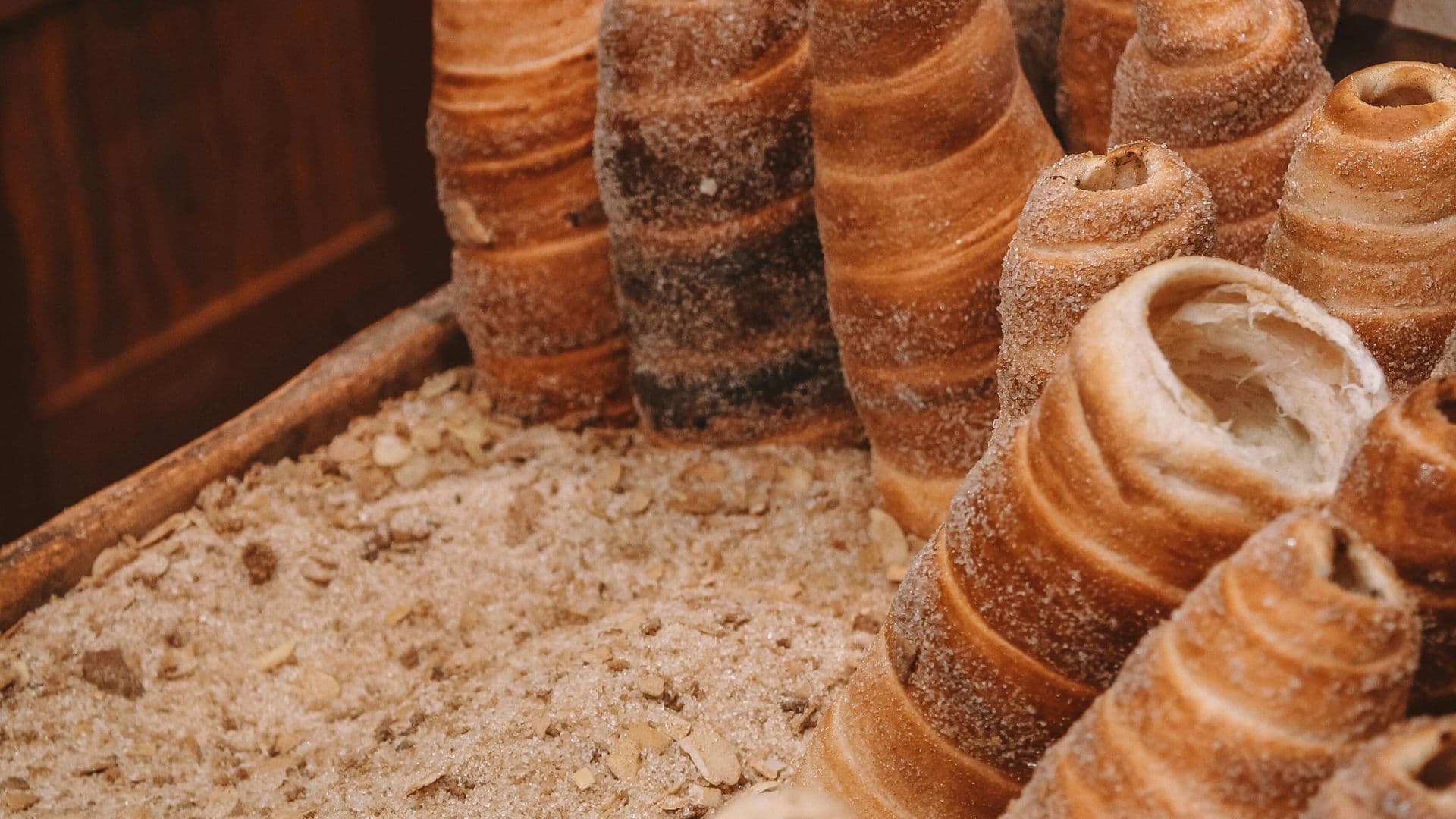
No. Trdelník is not a traditional Czech food. It is a Slovak and Hungarian pastry — called trdelník or kürtőskalács — that was introduced to Prague's tourist areas in the early 2000s and marketed as an "Old Bohemian" treat. No Czech cookbook published before 2000 contains a trdelník recipe. No Czech grandmother bakes it at home. The "traditional Prague pastry" label that appears on tourist-area stalls is a successful marketing invention, not food history.
If that answer surprises you, you are in good company. Most visitors to Prague assume trdelník has been part of the city for centuries. The chimney-shaped pastries rotating on spits are everywhere in Old Town — the smell of cinnamon sugar drifts across Charles Bridge, and the stalls carry signs reading "Traditional Czech Trdelník" in four languages. It looks ancient, smells wonderful, and costs 100–180 CZK.
But the story behind it is more interesting than the marketing suggests.
Where Trdelník Actually Comes From
The pastry's documented history traces to the town of Skalica in western Slovakia and to the Hungarian Transylvanian tradition of kürtőskalács. In Slovakia, trdelník has been baked for generations — the town of Skalica holds an annual trdelník festival and successfully registered it as a protected geographical indication with the EU in 2007. The recipe involves wrapping sweet dough around a wooden or metal cylinder, rolling it in sugar (and sometimes walnuts), and roasting it over coals.
The Hungarian kürtőskalács follows a similar principle and has roots going back to at least the 18th century in Transylvania. Both versions are legitimate traditional pastries with genuine cultural heritage.
Prague's version arrived roughly in the early 2000s. Entrepreneurs recognized that tourists wanted an "authentic local street food experience" and trdelník fit the role perfectly — it looks photogenic, smells enticing, can be eaten while walking, and the rotating spits make for good theater. The marketing angle was simple: call it Czech, set up in Old Town, and let the foot traffic do the rest.
What Prague Has Added
Whatever its origins, Prague's tourist industry has done what Prague's tourist industry does — innovated aggressively. The trdelník you find in Old Town today is not the same pastry you would eat in Skalica.
Ice cream trdelník — the cone-shaped version filled with soft serve — was a Prague invention. It became an Instagram phenomenon around 2016 and now outsells the traditional version at many stands. You can also find trdelník filled with Nutella, whipped cream, fruit, or combinations of all three.
Artisanal variations have appeared at some stands: sourdough-based dough, dark chocolate coatings, pistachio crusts, matcha glazes. Prague has turned a simple pastry into a platform for innovation — none of which has anything to do with tradition, but some of which is genuinely tasty.
Insider detail: The busiest trdelník stands in Old Town churn out pastries so fast that they are sometimes underbaked — doughy inside rather than properly crisp. If the stand has a long queue and the spits are turning quickly, the pastries may not have had enough time. The smaller stands on side streets, with slower turnover, often produce a better product because each pastry gets more time on the heat.
How Czechs Feel About It
Most Prague residents view trdelník with amused indifference. They do not eat it — it is not part of their food culture — but they do not actively resent it either. It is filed alongside other tourist phenomena that locals shrug at: Segway tours, "Czech absinthe" shots, and pub crawl groups on Dlouhá street.
The only thing that genuinely irritates some Czechs is the "traditional Czech" labeling. Czech food culture has plenty of genuine traditional pastries — koláče (round pastries with poppy seed, jam, or cottage cheese filling), buchty (baked buns stuffed with jam or plum butter), štrúdl (strudel, shared with Austrian tradition), and větrník (a caramelized cream puff that is uniquely Czech). These pastries have centuries of documented history in Bohemian kitchens. Trdelník has none.
Insider detail: If you want a Czech pastry with actual historical roots, look for a větrník at any good cukrárna (patisserie). It is a choux pastry ring filled with cream and topped with caramelized sugar — invented in Czechoslovakia and found nowhere else. Cukrárna Myšák on Vodičkova street makes an excellent one.
Should You Eat It?
Yes — if you want to. A warm trdelník, properly baked with a crisp sugar crust, is an enjoyable snack. The cinnamon-sugar version is the best. The ice cream versions are fun on a hot day. Just know what you are buying: a modern tourist snack with Slovak-Hungarian roots, not an ancient Bohemian tradition.
A few practical notes:
- Price: 100–150 CZK for a plain trdelník, 150–220 CZK for ice-cream-filled versions in tourist areas (as of 2026).
- Where: Charles Bridge, Old Town Square, and the streets connecting them have the highest concentration of stands. You will not find trdelník in residential neighborhoods — it exists only where tourists walk.
- Quality: Avoid stands where the pastries sit pre-made in piles. The best trdelník is baked fresh on the spit and handed to you warm. Watch it being made — the spinning is part of the experience.
Insider detail: The most reliable quality test is the sugar crust. On a properly baked trdelník, the sugar should be caramelized — slightly amber, crunchy, with a toffee-like flavor. If the sugar coating looks white and sandy rather than golden, the pastry has been removed from the heat too early. Walk to the next stand.
A private guide makes all the difference when exploring this part of Prague.
What to Eat Instead (If You Want Real Czech Sweets)
If the trdelník revelation has you curious about what Czechs actually eat for dessert, here are the authentic options:
Koláče — round pastries with fillings of mák (poppy seed), tvaroh (curd cheese), or povidla (plum jam). Sold at bakeries throughout the city, usually 25–40 CZK each.
Větrník — a Czech cream puff. Caramelized choux pastry ring, cream filling. Found at any cukrárna. About 60–90 CZK.
Medovník — layered honey cake. Dense, sweet, and rich. Served at cafés and restaurants. 80–120 CZK for a slice.
Buchty — baked yeast buns filled with jam, poppy seed, or curd cheese. A home-baking tradition that some bakeries still make well. 30–50 CZK.
Palačinky — Czech crepes, often filled with jam and topped with whipped cream. Available at restaurants and some market stalls. 80–140 CZK.
For a full exploration of Czech dishes — sweet and savory — see our complete guide to what to eat in Prague.
Experience Czech Food Culture With a Private Guide
The best way to understand Czech food is through the people who cook and eat it daily. On our All Prague in One Day private walking tour, we share food recommendations as we walk through each neighborhood — and we always point out the difference between tourist-marketed "traditions" and the real thing.
For a dining experience rooted in genuine Czech history, the Medieval Dinner Show at U Pavouka serves a five-course meal inspired by historical recipes in a 15th-century vaulted cellar. No trdelník on the menu — just real food with real provenance.
Browse all our private tours in Prague and the Czech Republic. Exclusively yours, with your own guide.
Frequently Asked Questions
Is trdelník Czech or Slovak? Slovak and Hungarian. The pastry has documented roots in Skalica (Slovakia) and the Transylvanian kürtőskalács tradition. It was introduced to Prague's tourist areas in the early 2000s.
Why do they call trdelník a traditional Czech pastry? Marketing. The "traditional Old Bohemian" label is commercially effective but historically unsupported. No Czech cookbook before 2000 includes trdelník. The EU protected geographical indication belongs to Skalica, Slovakia.
Should I try trdelník in Prague? If you want to, yes — a warm, properly baked one with caramelized sugar is enjoyable. Just know it is a tourist snack, not a Czech tradition. For authentic Czech pastries, try větrník or koláče instead.
How much does trdelník cost in Prague? Plain versions cost 100–150 CZK, ice-cream-filled versions 150–220 CZK. You will only find them in tourist areas — locals do not eat them.
What are real traditional Czech desserts? Koláče (filled round pastries), větrník (caramelized cream puff), medovník (honey cake), buchty (jam-filled buns), and štrúdl (strudel). All have genuine centuries-old roots in Bohemian cooking.
You May Also Like
Want to see Prague for yourself?
Take our flagship Prague tour-6-640x430.jpg&w=3840&q=75)