Prague Classical Music Concerts — Where to Hear Opera, Symphony and Chamber Music
Prague is one of the great music cities of Europe. Mozart premiered Don Giovanni here in 1787 and declared that Prague understood his music better than Vienna. Dvořák composed his most famous works in the city. Smetana wrote Má Vlast (My Country) as a love letter to Bohemia's landscape and history. The Czech Philharmonic, founded in 1896, is one of the oldest and most respected orchestras in the world.
This is not just historical background. Prague's classical music scene is alive today in a way that surprises visitors. On any given evening, you can choose between a full opera at the National Theatre, a symphony at the Rudolfinum, chamber music in a Baroque church, organ recitals in medieval chapels, and Mozart performances in the very hall where he conducted. The quality ranges from world-class to tourist-oriented, and knowing the difference before you book makes all the difference.
We take guests to concerts regularly and have learned which venues deliver genuine performances and which are essentially selling atmosphere at music's expense. This guide covers the best venues, the types of performances available, and how to get good seats at fair prices.
The Major Venues
Rudolfinum (Dvořák Hall)
The Rudolfinum is Prague's premier concert hall and the home of the Czech Philharmonic. Built between 1876 and 1884 in Neo-Renaissance style, it sits on the bank of the Vltava facing the river and the Lesser Town. The Dvořák Hall inside is acoustically superb — one of the best concert halls in Central Europe — with a warm, resonant sound that rewards every seat.
Czech Philharmonic performances here are the pinnacle of Prague's classical music scene. The orchestra's sound is distinctive: rich string tone, warm brass, and a tradition of Slavic repertoire (Dvořák, Smetana, Janáček, Martinů) that no other orchestra plays with the same authority.
Insider detail: the Rudolfinum also houses the Suk Hall, a smaller chamber music space used for recitals and smaller ensembles. If the Czech Philharmonic is sold out, check the Suk Hall schedule — the performances are often just as rewarding and tickets are easier to obtain. The building itself is worth visiting for the architecture alone, with its gallery of composer busts along the roofline.
National Theatre (Národní divadlo)
The golden-roofed National Theatre on the Vltava embankment is where Prague's opera tradition lives. Built in 1881 with funds from a nationwide public collection, it burned down almost immediately and was rebuilt within two years — a story that defines Czech cultural determination. The interior is lavish: ceiling frescoes, gilded boxes, crimson velvet, and a curtain painted by Vojtěch Hynais that is a work of art in itself.
The National Theatre opera company performs a wide repertoire — Verdi, Puccini, Wagner, Mozart, and Czech composers including Smetana (whose The Bartered Bride is the most performed Czech opera), Dvořák, and Janáček. Performances are in the original language with Czech and English supertitles.
Insider detail: the cheapest seats in the upper gallery (starting around 100-200 CZK) offer a legitimate experience. The sound carries well in the auditorium, and while the view of the stage is partially restricted from the sides, the atmosphere of being inside this building during a live opera is worth the compromise.
Estates Theatre (Stavovské divadlo)
This is where Mozart premiered Don Giovanni on October 29, 1787, conducting from the keyboard. The theatre has been in continuous use since 1783, making it one of the oldest operating theatres in Europe. The Neo-Classical interior looks much as it did in Mozart's time — pale green and gold, with intimate proportions that make every seat feel close to the stage.
The Estates Theatre alternates between opera, ballet, and drama. Mozart performances here carry a historical charge that no other venue can match. When they perform Don Giovanni or La clemenza di Tito (also premiered here, in 1791), you are hearing the music in the room it was written for.
Municipal House (Obecní dům) — Smetana Hall
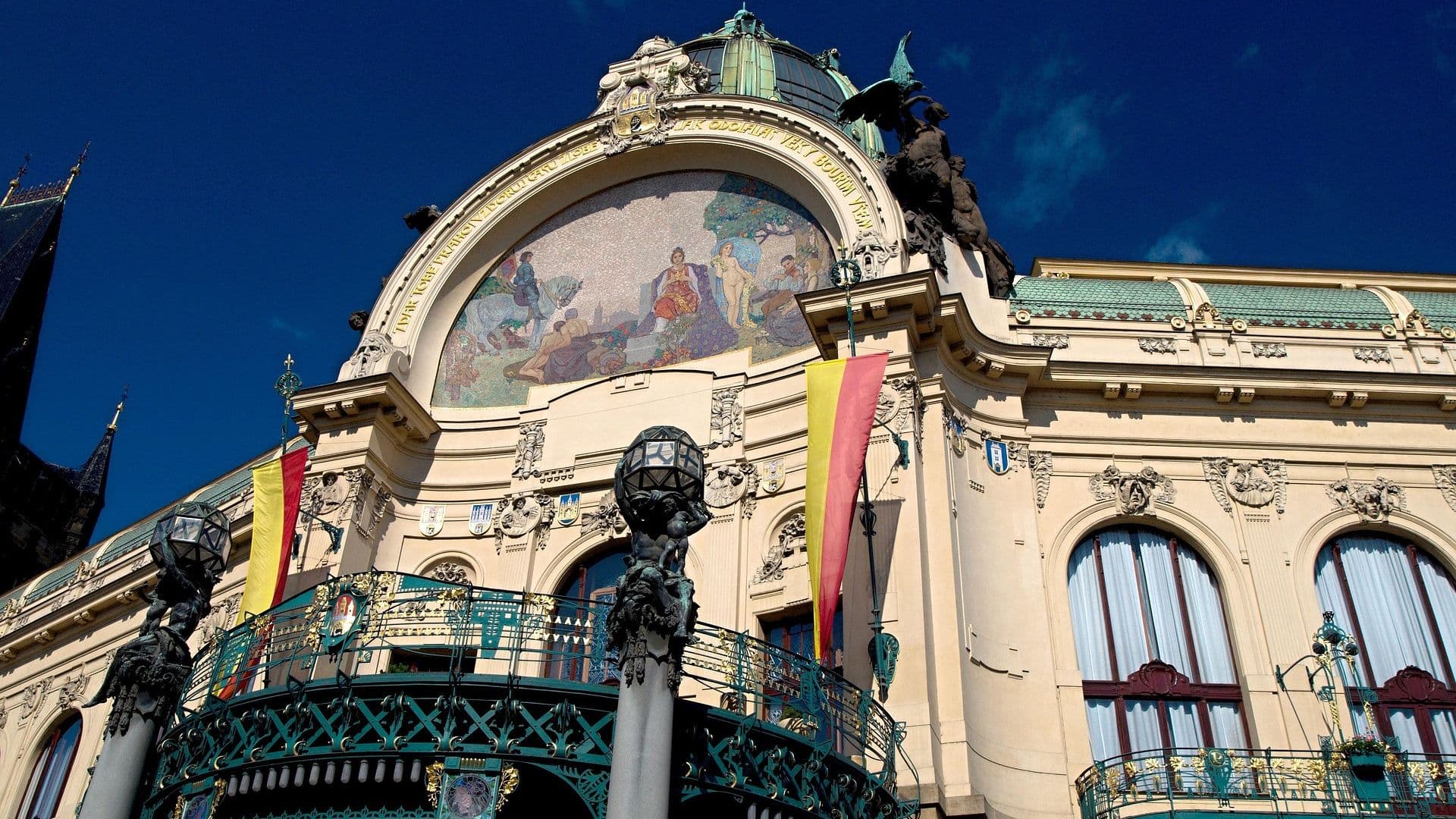
The Smetana Hall inside the Municipal House is Prague's most visually spectacular concert venue. The Art Nouveau interior, designed by Alfons Mucha and other Czech artists, surrounds you with painted ceilings, mosaic walls, and sculptural details in every direction. The Prague Symphony Orchestra (FOK) performs here regularly.
The acoustics are good but not on the level of the Rudolfinum — the hall was designed as much for visual impact as for sound. That said, attending a concert in the Smetana Hall is a complete sensory experience. The annual opening concert of the Prague Spring Festival takes place here every year on May 12, with a traditional performance of Smetana's Má Vlast.
Baroque Churches — Klementinum, St. Nicholas, St. Simon and Jude
Prague's churches host hundreds of classical concerts throughout the year. The best venues are the Mirror Chapel in the Klementinum, St. Nicholas Church in the Lesser Town (Malá Strana), and the Church of Saints Simon and Jude in the Old Town.
The Klementinum Mirror Chapel is small, ornate, and intimate — a jewel box of Baroque mirrors and frescoes. String quartets and small ensembles sound excellent here. St. Nicholas in Malá Strana is larger and more dramatic, with organ concerts that fill the enormous Baroque interior with sound in a way that recordings cannot capture.
Insider detail: not all church concerts are equal. Some are serious performances by professional musicians. Others are aimed squarely at tourists, with student-level performers playing the same Vivaldi Four Seasons program every night for 600-900 CZK a ticket. The musicians' names and affiliations should be listed on the programme or website — if they are not, be cautious.
What to Hear
Czech Philharmonic
The country's flagship orchestra. Season runs from September to June, with performances mostly on Thursday and Friday evenings at the Rudolfinum. Tickets range from 250 to 2,000 CZK depending on the seat and the programme. The Dvořák and Smetana repertoire is the core, but they perform the full symphonic canon. Guest conductors and soloists are consistently world-class.
Prague Symphony Orchestra (FOK)
The city's orchestra, performing at the Municipal House and occasionally at other venues. A strong ensemble with a broader programming approach — more contemporary works, film music concerts, and collaborative projects alongside the standard repertoire. Tickets are generally less expensive than the Czech Philharmonic.
A private guide makes all the difference when exploring this part of Prague.
Opera at the National and Estates Theatres
The National Theatre opera company rotates productions throughout the season. Check the schedule for Czech-language operas (Smetana, Dvořák, Janáček) — these are performed with particular authority and passion. Italian and German repertoire is also well-represented.
Prague Spring Festival (Pražské jaro)
Running annually from May 12 to June 3, this is one of Europe's most prestigious classical music festivals. Founded in 1946, it attracts the world's top orchestras, conductors, and soloists. Tickets for headline events sell out months in advance, but many concerts remain available closer to the date. If your visit overlaps with the festival, prioritize it.
Chamber Music and Recitals
Smaller venues throughout the city host chamber music year-round. The Lobkowicz Palace concert hall at Prague Castle, the Liechtenstein Palace, and the various Baroque churches all offer programmes ranging from Mozart string quartets to solo organ recitals. Our All Prague in One Day tour passes several of these venues, and your guide can recommend specific performances based on what is scheduled during your visit.
How to Buy Tickets
Czech Philharmonic: book through the official website (ceskafilharmonie.cz) or the Rudolfinum box office. Season tickets and popular programmes sell quickly. Single tickets are released about two months before each concert.
National Theatre / Estates Theatre: the narodni-divadlo.cz website sells tickets for all three National Theatre stages. English interface available. Booking two to four weeks ahead is usually sufficient except for premieres.
Church concerts: most sell tickets at the door or through agents on the street. For the better church concerts, book through the venue's website directly to confirm the performers' credentials.
Insider detail: avoid ticket resellers on the street near the Astronomical Clock and Old Town Square. They sell church concert tickets at inflated prices for the generic tourist concerts. If you see a ticket seller approaching you on the street, the concert they are promoting is almost certainly the tourist-grade variety.
Pairing Music with Prague's History
Classical music and Prague's architecture are inseparable. The buildings where you hear the music are often as remarkable as the performances themselves. Visiting the Old Town and Lesser Town during the day gives you the historical context that makes an evening concert richer.
Our Charles Bridge and Old Town tour passes the Klementinum, the Estates Theatre, and the Municipal House — all key music venues. For an evening that combines history with atmosphere, the Medieval Dinner show offers a different kind of period performance: live music, swordplay, and a five-course feast in a Gothic cellar, drawing on the same centuries of tradition that produced Prague's concert culture.
Practical Tips
What to wear: the Rudolfinum and National Theatre are smart casual to formal — most people dress up, though there is no strict dress code. Church concerts are more relaxed. The Estates Theatre falls somewhere in between.
Best seats: at the Rudolfinum, the stalls (přízemí) centre rows offer the best acoustics. At the National Theatre, the first balcony (1. balkon) provides the best combination of sightline and sound. At the Estates Theatre, anything in the stalls or first tier is excellent.
When to go: the main concert season runs September through June. Summer brings outdoor concerts and festivals but fewer performances by the major ensembles. The Prague Spring Festival in May-June is the highlight of the musical year.
FAQ
What is the best classical music venue in Prague? The Rudolfinum's Dvořák Hall offers the finest acoustics. The Estates Theatre offers the most historical significance. The National Theatre provides the most visually impressive opera experience. For atmosphere, the Baroque churches are unmatched. It depends on what matters most to you.
How much do concert tickets cost in Prague? Czech Philharmonic tickets range from 250 to 2,000 CZK. National Theatre opera starts around 100 CZK for restricted-view seats and goes up to 1,500 CZK. Church concerts run 400-900 CZK. Prague is significantly more affordable for classical music than Vienna, London, or Paris.
Can I see an opera in Prague without speaking Czech? Yes. Most operas at the National Theatre are performed in the original language (Italian, German, French, or Czech) with Czech and English supertitles projected above the stage.
Are church concerts worth attending? The better ones — absolutely. The combination of Baroque architecture and live chamber music is genuinely beautiful. Verify the performers beforehand: concerts featuring named professional ensembles are far superior to the generic tourist concerts.
You May Also Like
- Prague Art Nouveau Guide — Mucha, Architecture and Design
- Prague Churches Worth Visiting
- Famous People from Prague — Mozart, Kafka and Beyond
Experience Prague through its music, its architecture, and the stories behind both. Browse our private tours — exclusively yours — and let a local guide connect the dots between what you see and what you hear.
Want to see Prague for yourself?
Take our flagship Prague tour-6-640x430.jpg&w=3840&q=75)