Prague Ghost Tour Guide — Haunted Places, Dark Legends and Night Walks
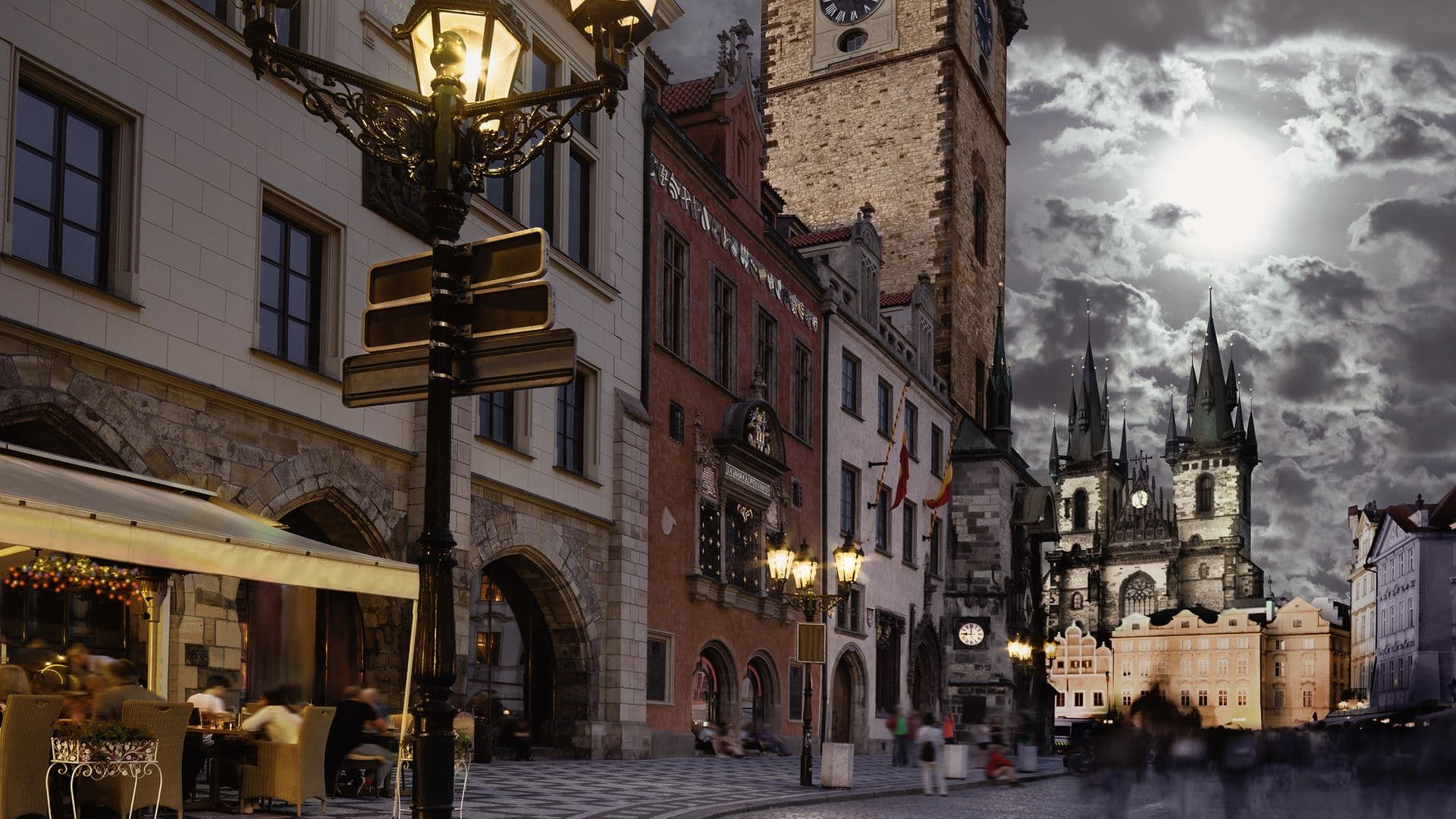
Prague has more ghost stories per square metre than nearly any city in Europe. A thousand years of history packed into narrow medieval streets, underground tunnels, and Gothic churches has produced a catalogue of legends involving headless Templars, cursed alchemists, bricked-up nuns, and spectral carriages rattling across cobblestones at midnight. Some of these stories are folklore. Some are rooted in documented events. All of them are woven into the fabric of the city.
Ghost tours have become one of Prague's most popular evening activities, and for good reason. The Old Town after dark, lit by gas lamps with shadows pooling in the doorways of 600-year-old buildings, creates an atmosphere that no amount of theatrical staging can match. The right tour turns a walk through streets you may have seen during the day into something entirely different.
We have guided thousands of guests through Prague's historic centre, and the ghost stories and legends are part of every neighbourhood's identity. This guide covers the most haunted places, the best-known legends, and how to choose a ghost tour that delivers genuine atmosphere rather than cheap scares.
Prague's Most Haunted Places
The Old Town Hall and the Astronomical Clock
The Astronomical Clock has been marking time since 1410, making it one of the oldest functioning astronomical clocks in the world. The legend says that after clockmaker Master Hanuš completed the mechanism, the Prague councillors ordered him blinded so he could never build another for a rival city. Hanuš supposedly reached into the clock's mechanism in revenge, stopping it and dying in the process. The clock remained broken for decades.
Insider detail: the blinding story is almost certainly fiction — records suggest the clock was built by Mikuláš of Kadaň, and Hanuš was involved in later repairs. But the legend has been told in Prague since at least the 16th century, and standing beneath the clock at night, with its skeleton figure turning the hourglass every hour, it feels plausible.
Charles Bridge at Night
Charles Bridge was commissioned in 1357, and by the time it was completed in the early 15th century, it had already accumulated its first ghost stories. The most persistent involves a woman in white who appears near the bridge tower on the Old Town side. She is said to be the spirit of a young woman who drowned in the Vltava after being betrayed by her lover — a story that has appeared in various forms since the 17th century.
The bridge's 30 Baroque sculptures add to the atmosphere after dark. The statue of St. John of Nepomuk marks the spot where the real John of Nepomuk was thrown from the bridge into the river in 1393 on the orders of King Wenceslas IV. Our Charles Bridge and Old Town tour covers both the verified history and the legends — you will hear the story of Nepomuk's death and why touching the bronze plaque on his statue has become Prague's most followed superstition.
The Church of St. James (Kostel sv. Jakuba)
Inside this Baroque church in the Old Town hangs a mummified human forearm, blackened and shrivelled, suspended from a chain near the entrance. According to legend, a thief tried to steal a jewelled necklace from the statue of the Virgin Mary. The statue grabbed his arm and would not let go. The monks found him the next morning and had to amputate his arm to free him. They hung the arm as a warning.
The arm is real. It has been hanging there for over 400 years. Whether the statue actually grabbed it is a matter of personal belief, but walking into the church and seeing it dangling above the door in the dim light is one of Prague's most genuinely unsettling moments.
The Old Jewish Cemetery
The Starý židovský hřbitov in Josefov is one of Europe's most atmospheric places. Used from the 15th century to 1786, it contains approximately 12,000 visible tombstones packed into a space far too small, with up to 12 layers of burials stacked beneath the surface. The tombstones lean at angles, pushed by centuries of earth settling around the graves below.
The most famous ghost story connected to the cemetery involves Rabbi Judah Loew ben Bezalel and the Golem — an artificial being made from Vltava riverbed clay, brought to life to protect the Jewish community from persecution. The Golem is said to rest in the attic of the Old-New Synagogue next door, waiting to be awakened again.
Insider detail: the attic of the Old-New Synagogue is not open to the public and has been sealed for centuries. In 1883, a rabbi reportedly climbed up to check and came back down without saying what he found. The synagogue itself, built around 1270, is one of the oldest surviving synagogues in Europe.
Ungelt (Týn Court)
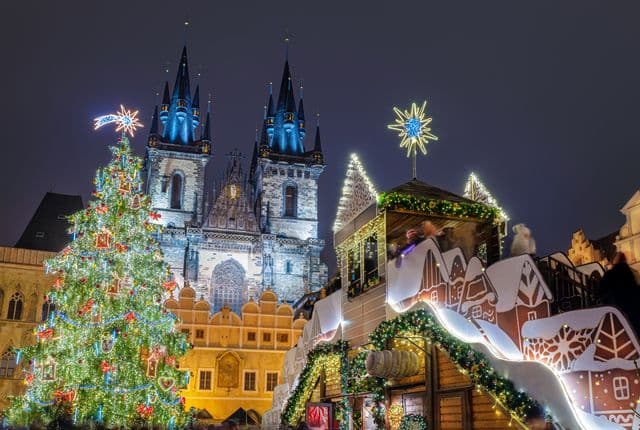
The medieval merchants' courtyard behind the Church of Our Lady before Týn has its own ghost — a Turkish merchant who was murdered by rivals in the 14th century. His spirit is said to wander the courtyard at night, wearing a turban and long robes. The courtyard, which served as a customs house and inn for foreign traders, has been beautifully restored, but after dark the narrow passages between its buildings feel remarkably medieval.
Karlova Street
This narrow lane connecting Old Town Square to Charles Bridge is one of the most walked streets in Prague during the day. At night, it narrows further in the imagination. The street's most famous ghost is a fiery skeleton said to appear at midnight, walking from the Klementinum toward the bridge. The skeleton is believed to be a Jesuit monk who broke his vows and was condemned to walk the street for eternity.
Insider detail: Karlova Street was part of the Royal Route — the coronation processional path from Powder Tower to Prague Castle. Generations of Bohemian kings walked this street, and the buildings along it date from the 13th to 17th centuries. The ghost stories attach to specific doorways and corners that locals can point out.
Choosing a Ghost Tour
Prague has dozens of ghost tour operators, and the quality ranges from excellent to embarrassing. Here is what separates the good from the bad.
A private guide makes all the difference when exploring this part of Prague.
Good ghost tours are led by knowledgeable guides who mix verified history with local legends, explaining which parts are documented and which are folklore. They use the atmosphere of the streets and buildings rather than relying on costumes or jump scares. The best tours visit locations that standard walking tours skip — hidden courtyards, narrow alleys, and churches that are closed to the public during the day but open for the tour.
Bad ghost tours rely on actors in capes jumping out from doorways, recycled stories read from a script, and large groups of 30 or more people herded through the same tourist streets. The stories are generic and could apply to any old European city.
The best approach is a private tour with a guide who knows Prague's history deeply. Our Hidden Prague Underground and Alchemy tour takes you into the spaces beneath the city — medieval cellars, alchemist workshops, and underground passages — where the atmosphere is impossible to fake.
Prague's Ghost Legends Worth Knowing
The Headless Templar — a knight in white appears on Liliová Street near Bethlehem Square, carrying his head under his arm. The Knights Templar had a commandery in Prague, and after their order was dissolved in 1312, their properties were seized. The headless knight is said to be a Templar who was executed during the suppression.
The Iron Man of Platnéřská Street — a figure in armour stands motionless near the corner of Platnéřská and Křížovnická streets on certain nights. Legend says he was a knight who murdered his unfaithful lover and her companion, then was condemned by a local priest to stand as a living statue for 100 years. He appears once a year, seeking someone to break his curse by talking to him for one hour without fleeing.
The Devil's Pillar at Vyšehrad — three stone columns in the grounds of the Vyšehrad fortress are said to be the remains of a pillar carried from Rome by the Devil himself as part of a wager with a local priest. The priest won the bet, and the Devil smashed the pillar in rage. The fragments still stand where they landed.
The Water Goblin (Vodník) — Czech folklore places water spirits in every river and pond, and Prague's Vltava has its own vodník. This green-skinned creature is said to sit under the weirs near Čertovka (Devil's Channel) in Malá Strana, collecting the souls of the drowned in upturned teacups. The Čertovka area, with its water wheels and narrow channels, has a distinct atmosphere even in daylight.
When to Go
Ghost tours run year-round, but the experience changes with the seasons. Summer tours start later (9-10 PM) because it stays light until nearly 9 PM in June and July. The atmosphere is better in autumn and winter, when darkness falls by 5 PM and the streets empty out earlier.
Insider detail: the Old Town gas lamps — yes, real gas lamps — are lit by a lamplighter each evening in certain streets near the Old Town Square. If you catch the lamplighter on his rounds (usually between 4 and 5 PM in winter), it adds an almost theatrical prelude to an evening ghost walk.
October around Halloween is peak season for ghost tours, with many operators adding special themed walks. Christmas season also works well — the combination of decorated streets and long dark evenings creates a contrasting atmosphere.
Combining Ghost Stories with Daytime History
The places that feel haunted at night are fascinating for different reasons during the day. The Old Jewish Cemetery, the Church of St. James, Charles Bridge — they all reward a return visit in daylight, when you can examine the architecture and read the inscriptions that were invisible in the dark.
For a complete experience, pair an evening ghost walk with our All Prague in One Day tour to see the same locations in full context. And for a themed evening experience, the Medieval Dinner show brings the medieval period to life with food, swordplay, and fire dancing in a Gothic cellar beneath the Old Town — the kind of venue where the ghost stories feel very close.
FAQ
Are Prague ghost tours scary? Most are atmospheric rather than genuinely frightening. Good tours focus on storytelling and history with a dark twist. There are no haunted house-style scares. Children over 10 generally enjoy them. Tours labelled "horror" or "extreme" may include actors and jump scares — check the description before booking.
What is the most haunted place in Prague? The Old Town has the highest concentration of ghost stories. Charles Bridge, the Church of St. James with its mummified forearm, the Old Jewish Cemetery, and the streets around Ungelt are all considered particularly active in local folklore.
Do I need to book a ghost tour in advance? For group tours (the most common format), booking one to two days ahead is sufficient outside peak season. For private tours, book at least one week ahead. October ghost tours sell out quickly.
When do ghost tours start? Most depart between 8 and 10 PM depending on the season. Summer tours start later due to the late sunset. Winter tours may start as early as 7 PM. Duration is typically 90 minutes to two hours.
You May Also Like
- Prague Legends and Myths — Stories Behind the City
- Underground Prague — What Lies Beneath the Streets
- Jewish Quarter Prague — A Complete Guide to Josefov
Discover the real Prague — stories, secrets, and history that guide books skip. Browse our private tours — exclusively yours, with your own guide — and explore with someone who knows every legend and every lane.
Want to see Prague for yourself?
Take our private Prague tour-6-640x430.jpg&w=3840&q=75)