Prague Neighborhoods Guide — Where to Stay, Eat and Explore Beyond the Centre
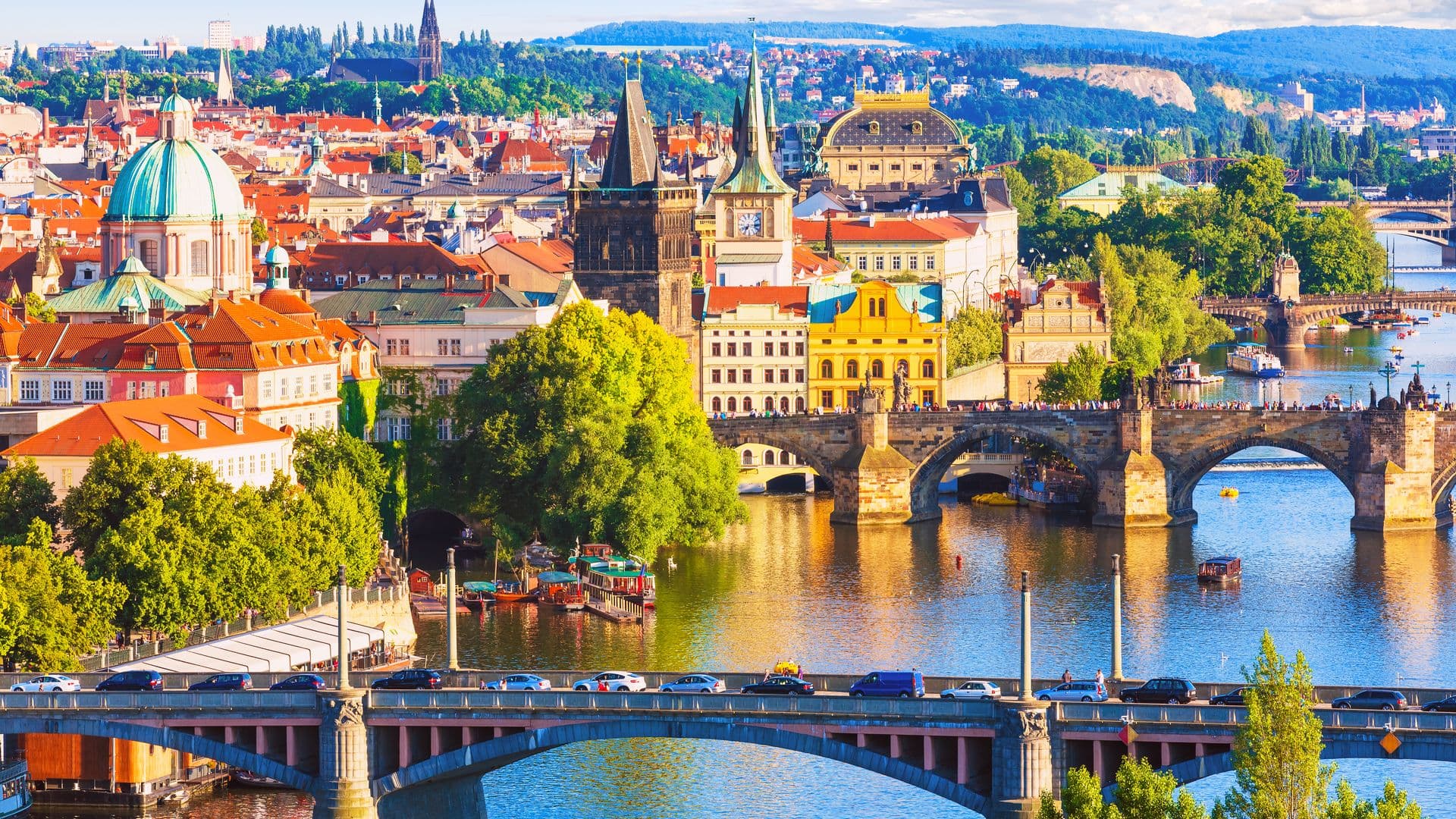
Prague is not one city — it is a collection of distinct neighbourhoods, each with its own character, history, and reason to visit. Most tourists see the Old Town, cross Charles Bridge, and visit Prague Castle. That covers about 15% of what makes Prague interesting. The other 85% is in the neighbourhoods that surround the historic core, where Czech daily life happens alongside world-class restaurants, galleries, parks, and architecture.
Understanding Prague's neighbourhoods changes how you plan your trip. It tells you where to book your hotel, where to eat dinner, where to go for nightlife, and which areas reward an afternoon of aimless walking. We take guests through many of these neighbourhoods on our tours, and the conversations often start the same way: "I had no idea this part of Prague existed."
This guide is a hub — an overview of Prague's most interesting districts with links to deeper guides for each one. Whether you have one day or one week, knowing these neighbourhoods helps you see a more complete, more honest version of the city.
The Historic Centre
Staré Město (Old Town)
The medieval heart of Prague. Old Town Square, the Astronomical Clock, the Church of Our Lady before Týn, the Klementinum, and the dense network of narrow lanes that connect them. This is where most visitors spend most of their time, and for good reason — the concentration of Gothic, Baroque, and Renaissance architecture is extraordinary.
The trade-off is crowds and tourist pricing. Restaurants on Old Town Square charge double what you would pay two streets away. The souvenir shops sell identical stock at inflated prices. But the architecture itself is irreplaceable, and early morning or evening visits — when the tour groups have gone — reveal the neighbourhood at its most atmospheric.
Our Charles Bridge and Old Town tour covers the essential landmarks with the context and backstories that make them more than photo opportunities.
Insider detail: the best Old Town experiences are in the courtyards and passages that tourists walk past. The Lucerna Passage off Wenceslas Square, the Ungelt courtyard behind the Týn Church, and the covered passages connecting Národní třída — these interior spaces hold cafes, galleries, and architecture that the street-level view does not reveal.
Josefov (Jewish Quarter)
Located within the Old Town, Josefov is Prague's historic Jewish quarter. The Old Jewish Cemetery, the Old-New Synagogue (one of Europe's oldest surviving synagogues, built around 1270), and the surrounding synagogues-turned-museums tell the story of a community that shaped Prague for nearly a millennium. Our Jewish Quarter guide covers the full history and practical visiting information.
Malá Strana (Lesser Town)
The neighbourhood between Charles Bridge and Prague Castle. Baroque palaces, embassy gardens, hidden courtyards, and steep lanes climbing toward the castle walls. Malá Strana feels smaller and quieter than the Old Town, with a village-like atmosphere despite being steps from the city centre.
The Church of St. Nicholas dominates the central square with its massive Baroque dome. The Wallenstein Garden, Vrtba Garden, and Vojanovy Sady offer green escapes from the stone streets. Nerudova Street — named after writer Jan Neruda — climbs steeply toward the castle, lined with Baroque house signs that predate street numbering.
Hradčany (Castle Quarter)
The district surrounding Prague Castle. Beyond the castle complex itself, Hradčany includes Strahov Monastery (with its spectacular library and brewery), Nový Svět (a tiny street of colourful houses that feels untouched by time), and Loreta (a pilgrimage church with a famous carillon). Hradčany is less visited in the afternoon once the castle tour groups disperse, making it ideal for a quiet late-day walk.
Beyond the Centre
Vinohrady
Prague's most liveable neighbourhood, and increasingly its most interesting for visitors. Tree-lined streets, Art Nouveau apartment buildings, independent restaurants, wine bars, and one of Prague's best parks (Riegrovy sady). Vinohrady sits just east of the city centre, reachable in 10 minutes by metro from the Old Town.
The neighbourhood around Náměstí Míru (Peace Square) is the heart of Vinohrady — the neo-Gothic Church of St. Ludmila, a daily farmers' market, and excellent restaurants within walking distance. Read our full Vinohrady guide for restaurant recommendations and walking routes.
Insider detail: Vinohrady is where many Prague guides, expats, and creative professionals live. The restaurants here serve locals, not tourists — meaning better food, lower prices, and menus that reflect what Czechs actually eat today rather than the tourist-oriented menus of the Old Town.
Žižkov
Žižkov is Prague's most idiosyncratic neighbourhood. Named after the Hussite commander Jan Žižka, it was historically a working-class district known for having more pubs per capita than any neighbourhood in Prague — a claim locals still defend. The Žižkov Television Tower, designed by Václav Aulický and decorated with David Černý's crawling baby sculptures, is one of Prague's most distinctive (and divisive) landmarks.
Today, Žižkov is transitioning. New cafes and restaurants sit alongside traditional Czech pubs. The streets are rougher around the edges than Vinohrady, which is part of the appeal. Read our full Žižkov guide for details.
Holešovice and Karlín
Two neighbourhoods that represent Prague's future. Holešovice, in a bend of the Vltava north of the centre, has transformed from an industrial district into a hub for contemporary art and culture. The DOX Centre for Contemporary Art, Veletržní Palác (the National Gallery's modern art collection), and a growing cluster of independent businesses define the area.
Karlín, just east of the centre, was devastated by floods in 2002 and rebuilt with modern architecture alongside restored 19th-century buildings. The result is Prague's most architecturally diverse neighbourhood, with some of the city's best restaurants and a relaxed, residential atmosphere. Read our Holešovice and Karlín guide.
Insider detail: the Holešovice market hall (Pražská tržnice) is a sprawling complex that combines a Vietnamese market, Czech food stalls, and weekend events. It is one of the most authentic multicultural spaces in Prague — nothing like the sanitized markets in tourist districts.
Náplavka (Riverbank)
Not a neighbourhood in the traditional sense, but a distinct district along the Vltava's east bank between Palackého Bridge and the Railway Bridge. The Náplavka embankment hosts the city's best farmers' market (Saturdays, year-round), popup bars, cultural events, and in summer, a floating swimming pool. It is where young Prague socializes on weekends. Read our full Náplavka guide.
Our guides know the best local spots — far from the tourist traps. Learn more about our team.
Smíchov
A former industrial district on the Vltava's west bank, south of Malá Strana. The Staropramen brewery complex dominates the riverfront, and the area has been undergoing significant development. Smíchov is useful as a hotel base — it is well-connected by metro and tram, accommodation is less expensive than the centre, and the walk to Malá Strana takes 15 minutes along the river.
Vyšehrad
The ancient fortress south of the city centre, sitting high above the Vltava. Vyšehrad predates Prague Castle and contains the Basilica of St. Peter and Paul, the Slavín cemetery (where Dvořák, Smetana, and Mucha are buried), and parkland with panoramic views. Our Vyšehrad guide covers the full history and walking routes.
Dejvice and Bubeneč
Residential neighbourhoods west of the castle with a distinctive early 20th-century character. The wide Vítězné náměstí (Victory Square) with its Functionalist architecture, the diplomatic quarter with grand villas, and the Šárka Nature Reserve on the western edge make these areas worth exploring on a longer stay.
Where to Stay — Neighbourhood by Neighbourhood
Neighbourhood | Best For | Price Level | Walk to Old Town
Old Town | First-time visitors, short stays | High | You are there
Malá Strana | Romantic stays, castle access | High | 10 min via bridge
Vinohrady | Food lovers, longer stays | Medium | 10 min by metro
Žižkov | Budget, nightlife, character | Low-Medium | 15 min by tram
Karlín | Modern comfort, restaurants | Medium | 10 min by metro
Holešovice | Art, culture, local vibe | Medium | 15 min by tram
Smíchov | Budget, good transport links | Low-Medium | 15 min by metro
Getting Around
Prague's neighbourhoods are connected by an efficient metro, tram, and bus network. A 24-hour transit pass costs 150 CZK paper, 140 CZK in the PID Lítačka app, and covers unlimited rides on all three systems. The tram network is particularly useful for reaching neighbourhoods that the three metro lines do not serve directly.
Walking between adjacent neighbourhoods takes 15-30 minutes. Prague is compact — even neighbourhoods that feel remote on a map are usually closer than you expect.
Our All Prague in One Day tour connects the historic centre neighbourhoods — the castle, Lesser Town, Charles Bridge, and Old Town — in a single walking route that gives you the full picture. For evenings, the Medieval Dinner show brings you back to the Old Town for a Gothic cellar feast with unlimited beer, sword fighting, and fire dancing.
Neighbourhood Deep Dives
Each Prague neighbourhood has its own character, and the best way to understand the city is to explore beyond the historic centre. These guides take a closer look at local districts and the practical side of spending extended time in them.
- Vrsovice and Krymska Street -- cafes, street art, and nightlife off the tourist map
- Best coworking spaces in Prague -- where digital nomads and remote workers go
For the Prague castle most visitors miss, see our private Vyšehrad Fortress tour.
FAQ
What is the best neighbourhood to stay in Prague? For first-time visitors with 1-2 days, Old Town or Malá Strana puts you steps from the main landmarks. For stays of 3+ days, Vinohrady or Karlín offer better restaurants, lower hotel prices, and a more local atmosphere while remaining easy to reach by metro.
Is it safe to walk in Prague's neighbourhoods at night? Prague is one of the safest capital cities in Europe. All neighbourhoods in this guide are safe for walking at night. Normal city awareness applies — avoid unlit shortcuts and keep valuables secure.
Which Prague neighbourhood has the best restaurants? Vinohrady and Karlín lead for contemporary dining. The Old Town and Malá Strana have the most options but also the most tourist traps. Holešovice and Žižkov offer the best value. See our individual neighbourhood guides for specific restaurant recommendations.
How do I get from the airport to different neighbourhoods? The Airport Express bus connects to Hlavní nádraží (main train station), from where metro lines reach all central neighbourhoods in 5-15 minutes. Alternatively, trolleybus 59 goes to Nádraží Veleslavín metro station (Line A), connecting to Malá Strana, Old Town, and Vinohrady. Taxis and ride-hailing (Bolt, Liftago) cost 600-900 CZK to the centre.
Can I explore Prague's neighbourhoods on foot? Yes. Prague is a compact city. Walking from Old Town Square to Vinohrady takes about 20 minutes. From Charles Bridge to Holešovice takes about 30 minutes. The only neighbourhood that benefits from a tram or metro is Vyšehrad, which involves a steep uphill walk from the river.
You May Also Like
- Prague Hotel Neighbourhoods — Where to Book Your Stay
- Vinohrady Prague Guide — The Neighbourhood Locals Love
- Holešovice and Karlín — Prague's Creative and Culinary Districts
Want to see Prague beyond the postcards? Browse our private tours — exclusively yours, with your own guide — and discover the neighbourhoods that make this city worth more than a day trip.
Want to see Prague for yourself?
Try our medieval dinner experience