Prague vs Barcelona — Which European City Fits Your Trip?
Quick verdict: Barcelona offers beaches, Gaudí's surreal architecture, and Mediterranean warmth that Prague can't replicate. But Prague is cheaper, safer, more walkable, and delivers a depth of medieval and Baroque architecture that Barcelona's modernist identity doesn't cover. Beach lovers pick Barcelona. History and value seekers pick Prague.
Both cities sit on most "best European cities" lists, and for good reason. But they attract different travelers. We've guided thousands of visitors through Prague — many of them fresh from Barcelona or headed there next — and the contrasts they share with us are consistent. Here's the honest breakdown.
At a Glance
Category | Prague | Barcelona
Average daily budget | €60–90 | €100–160
Beer (0.5 l draft) | €2–3 | €4–6
Dinner for two | €30–50 | €50–90
Beach | No | Yes (Barceloneta)
Walking distance (center) | ~4 km | ~6 km
Top attraction queue | 15–30 min | 1–2 hours (Sagrada Família)
Best season | April–October | March–June, Sept–Nov
Summer temperature | 25–30°C | 28–35°C
Pickpocket risk | Low | High
English spoken | Widely | Widely
Architecture
This comparison is fascinating because both cities are architectural legends — but in completely different ways.
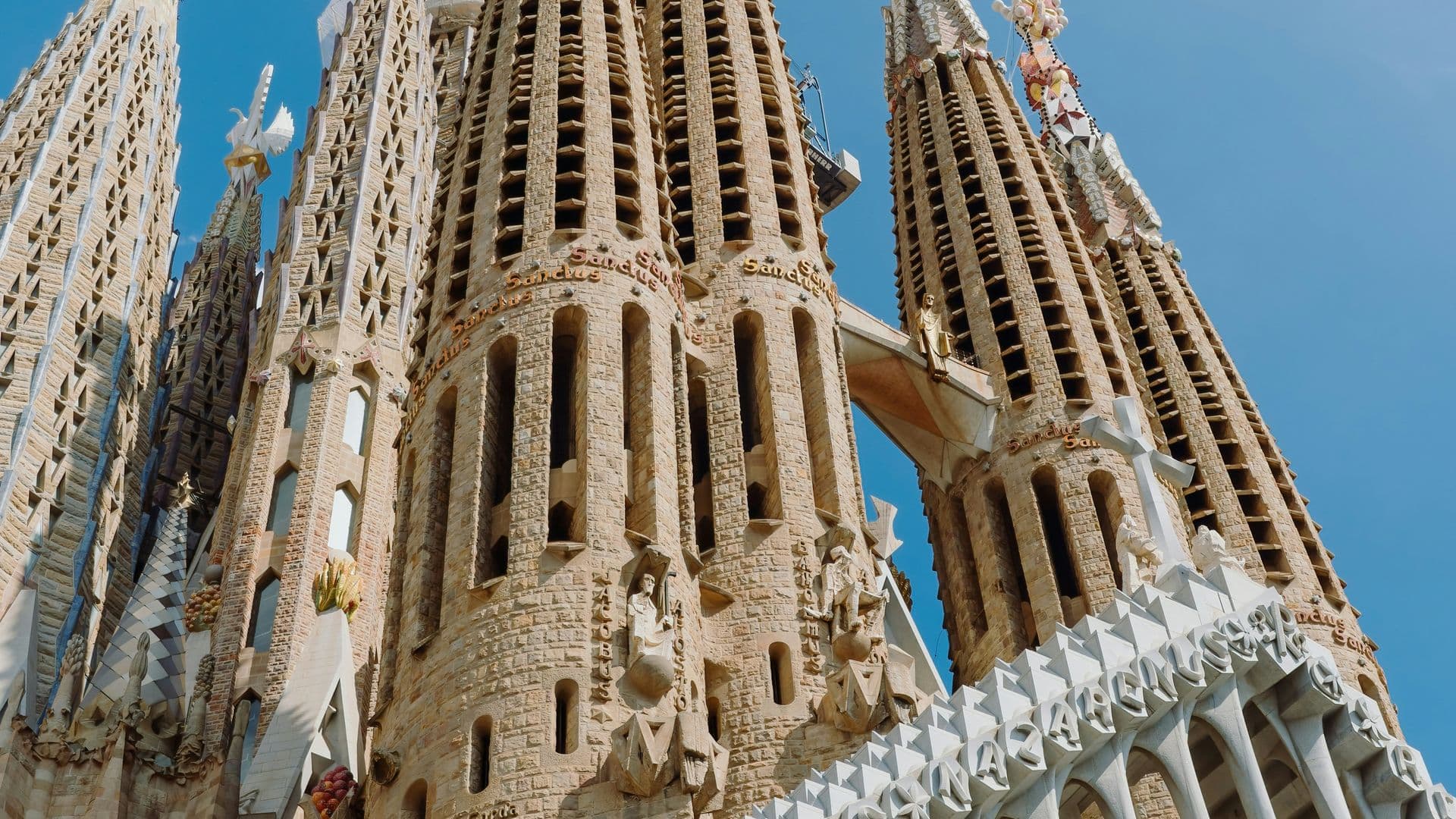
Barcelona is defined by Antoni Gaudí and Catalan Modernisme. The Sagrada Família, Park Güell, Casa Batlló, and Casa Milà (La Pedrera) are unlike anything else on Earth — organic, curving, almost biological structures covered in mosaic and colour. If you've never seen Gaudí's work in person, Barcelona delivers a genuine "I didn't know buildings could look like this" moment.
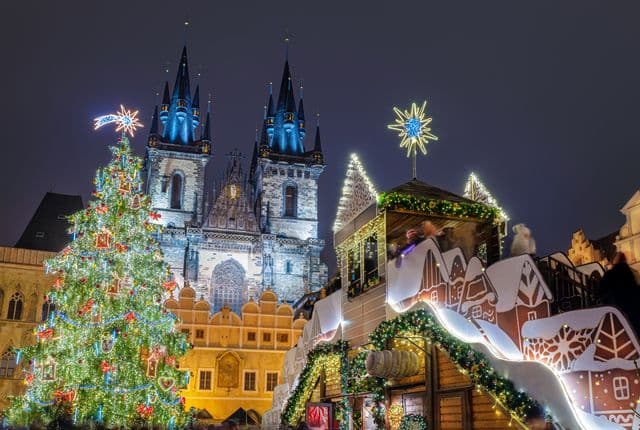
Prague's architectural story spans a wider timeline. Romanesque rotundas from the 11th century, Gothic churches from the 14th, Renaissance palaces from the 16th, Baroque facades from the 17th, Art Nouveau apartment buildings from the early 20th — all standing side by side in a center that was never bombed or bulldozed. The cumulative effect is extraordinary. Walking from Powder Tower to Prague Castle, you pass through nearly a millennium of European building styles in under two kilometres.
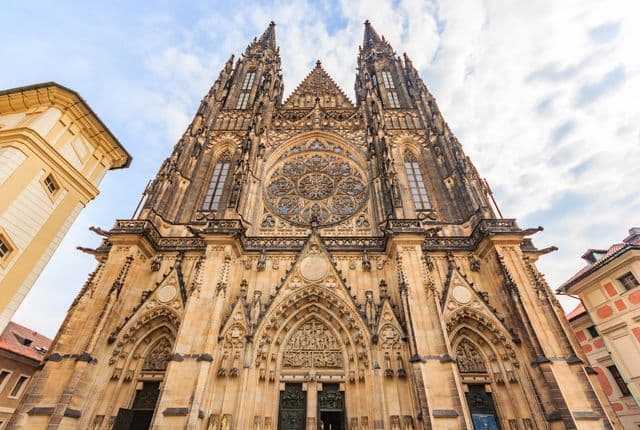
Prague Castle itself is the largest ancient castle complex in the world. St. Vitus Cathedral took nearly 600 years to finish, and its stained-glass windows by Alfons Mucha are genuinely moving. Our guests who arrive from Barcelona often say Gaudí was more spectacular as individual buildings, but Prague was more impressive as a complete city.
Food and Drink
Catalan cuisine is a branch of Mediterranean cooking — fresh seafood, pa amb tomàquet (bread rubbed with tomato), fideuà (like paella with noodles), and pintxos in the Boqueria Market. Barcelona also has a strong wine culture, with excellent Catalan cava (sparkling wine) and Priorat reds available at reasonable prices.
Prague's food tradition is Central European — svíčková, pork knee, duck with red cabbage, and dumplings that come with nearly everything. Heavier than Mediterranean food, but deeply satisfying, especially after a long day of walking in cool weather. The city's modern restaurant scene has grown rapidly, with excellent international options alongside traditional Czech pubs.
The beer comparison isn't even close. Czech lager is the best in the world — Pilsner Urquell, Budvar, Kozel, and dozens of regional breweries produce beer at a quality level that Spain's mass-market lagers can't approach. A half-litre in Prague costs €2–3 (as of 2026). In Barcelona, the same volume of a craft beer runs €5–7. Our guests who love beer consistently rank Prague as the highlight of their European trip for that alone.
Cost of Travel
Prague is significantly cheaper. Accommodation in Prague's center costs 30–50% less than equivalent options in Barcelona's Eixample or Gothic Quarter. Restaurant meals, museum tickets, and transport all follow the same pattern.
A practical example: a couple spending five days in Barcelona on a mid-range budget spends roughly €1,000–1,400 on food, transport, and activities (excluding accommodation). The same trip in Prague costs €500–800. Those savings add up to an extra day of travel or a significantly more comfortable hotel.
Beaches vs. History
Barcelona has beaches. Prague doesn't. If sun and sand are essential to your trip, this comparison is over.
But if you're traveling for culture, architecture, and history — Prague's center is one of the best-preserved medieval cities in Europe. The Old Town has remained structurally intact since the 14th century. The Jewish Quarter (Josefov) contains synagogues from the 13th century and one of the oldest Jewish cemeteries in Europe, with 12,000 tombstones layered on top of each other over centuries.
Barcelona has Gothic Quarter too — but much of it was reconstructed in the 19th and 20th centuries. Prague's medieval core is more authentic, which matters to travelers who care about historical depth.
Crowds and Safety
Both cities attract millions of visitors annually, but the crowd experience differs markedly.
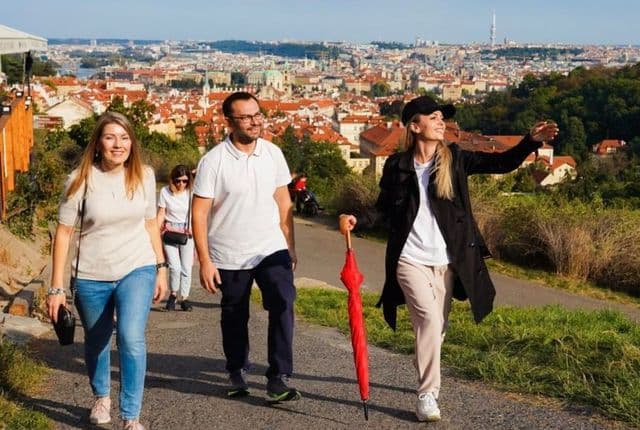
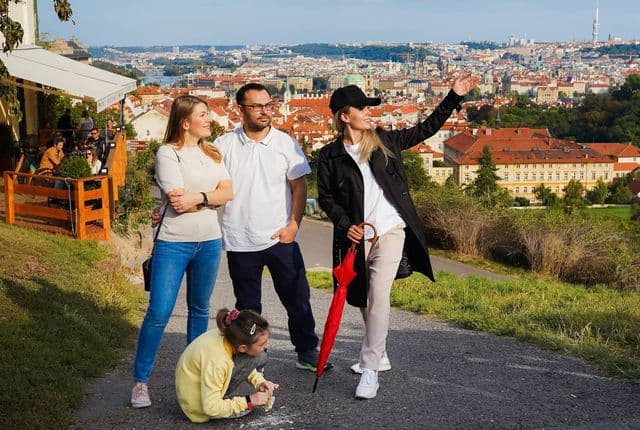
A private guide makes all the difference when exploring this part of Prague.
Barcelona's top attractions require advance booking and still involve significant waits. Sagrada Família tickets sell out days ahead. La Rambla is packed to the point of discomfort in summer. The Boqueria Market implemented visitor limits because the crowds were overwhelming vendors.
Prague's crowds concentrate on Charles Bridge and Old Town Square at midday — but they disperse. Walk to Malá Strana at 8 AM, and you'll have cobblestone streets largely to yourself. Prague Castle courtyards are nearly empty before 9 AM — we start our tours at that hour precisely because of the difference thirty minutes makes.
Safety is a clear differentiator. Prague is one of Europe's safest capitals — petty crime is rare, and violent crime against tourists is essentially nonexistent. Barcelona has a well-documented pickpocket problem, particularly on La Rambla, in the Metro, and at the beach. It's not dangerous, but it requires constant attention to bags and pockets in ways that Prague simply doesn't.
Nightlife
Barcelona's nightlife is legendary — clubs that open at 2 AM, rooftop bars overlooking the Mediterranean, and a beach party scene that runs from June through September. The city doesn't sleep until sunrise, and the warm nights make outdoor socializing natural.
Prague's nightlife is different but equally impressive in its own way. The city has one of Europe's densest concentrations of bars per capita, with craft beer bars, cocktail lounges, and late-night clubs in Žižkov, Vinohrady, and across the river in Smíchov. The Medieval Dinner Show at U Pavouka offers something neither city replicates — a Gothic cellar feast with fire dancers, sword swallowers, and unlimited drinks. And a night out in Prague costs a fraction of what Barcelona charges.
Day Trips
From Prague, Český Krumlov, Karlovy Vary, Kutná Hora, and Karlštejn Castle are all within 90 minutes. Central Europe's castle and town density is unmatched.
From Barcelona, Montserrat monastery, the Dalí Museum in Figueres, Girona, and the Costa Brava coast are excellent options. Barcelona's day trips lean toward coastal and Catalan culture; Prague's toward medieval towns and castles.
Climate
Barcelona wins for sun. The city gets 2,500+ hours of sunshine per year and Mediterranean temperatures that make outdoor dining comfortable from April through October. Summers are hot (regularly 33°C+), which can make sightseeing exhausting.
Prague's climate is continental — warm summers (25–30°C), cold winters (around 0°C), and an autumn that turns the city gold in October. Spring and autumn are the most comfortable seasons for walking tours. Many of our guests prefer Prague's climate for active sightseeing — it's easier to walk 20,000 steps in 22°C than in 35°C.
Which One Should You Choose?
Choose Prague if: you want deep European history and architecture at excellent value, prefer compact walkability, love beer, prioritize safety, and can live without a beach.
Choose Barcelona if: beaches are important, you want Mediterranean food and wine, Gaudí's architecture is on your bucket list, and you enjoy late-night culture.
The honest pattern we see: travelers in their 20s and 30s who want nightlife and beaches lean Barcelona. Couples, families, and culture-focused travelers lean Prague. But both cities genuinely reward every type of visitor.
Why Not Both?
Prague to Barcelona is a 2.5-hour flight, with budget carriers pricing it from €25. A trip that combines Prague's medieval heart with Barcelona's Mediterranean energy covers two very different sides of Europe. Give three to four days to each city and you'll come home with stories from both.
Experience Prague With a Private Guide
When you choose Prague, our full-day private walking tour covers the castle, Charles Bridge, Old Town, and the Jewish Quarter in a single walk. A licensed local guide, stories you won't find in guidebooks, and a pace that matches you. Exclusively yours.
Browse all our private tours of Prague and Czech Republic.
Frequently Asked Questions
Is Prague or Barcelona better for food?
Depends on your palate. Barcelona excels at seafood and Mediterranean cuisine. Prague excels at hearty Central European cooking and world-class beer at unbeatable prices. Prague's modern restaurant scene has also grown significantly, with Michelin-starred options.
Which city is safer for tourists?
Prague, by a clear margin. Pickpocket rates in Barcelona are among the highest in Europe, particularly around La Rambla and the Metro. Prague's petty crime rate is much lower, and violent crime against tourists is virtually nonexistent.
Can you visit Prague and Barcelona in one trip?
Yes. Direct flights connect them in about 2.5 hours, often for €25–50 on budget airlines. A week split between both cities works well.
Which city is more walkable?
Prague. Its historic center is more compact and almost entirely pedestrian-friendly. Barcelona is larger and hillier, particularly in the Gràcia and Montjuïc areas.
You May Also Like
Want to see Prague for yourself?
Take our flagship Prague tour-6-640x430.jpg&w=3840&q=75)